

Business Process Optimization (BPO) stands at the forefront of organizational transformation, offering a strategic pathway to enhanced efficiency and effectiveness. In today’s rapidly evolving business landscape, the ability to streamline operations and adapt to change is paramount. This comprehensive guide dives into the details of BPO, exploring its fundamental principles, methodologies, and the transformative power of digital enablers. From assessing process health to implementing cutting-edge technologies, we’ll navigate the journey of optimizing business processes, equipping leaders and professionals with the insights needed to drive meaningful change and secure a competitive edge in the market.
Process Mapping
Begin by meticulously each step of your processes, creating detailed flowcharts that illustrate the entire workflow. This visual representation helps identify redundancies, bottlenecks, and potential areas for improvement.
Performance Metrics Evaluation
Conduct a thorough analysis of current performance indicators, comparing them against industry benchmarks. This step provides valuable insights into where your processes stand in relation to best practices and competitors.
Stakeholder Feedback Collection
Engage with employees, customers, and partners through surveys, interviews, andfocus groups. Their first-hand experiences and insights often reveal pain pointsand opportunities that may not be apparent from data alone.
Bottleneck Identification
Utilize advanced analytics tools to pinpoint specific areas where delays or inefficiencies occur. This critical step helps prioritize improvement efforts and allocate resources effectively.
STRENGTH
Opportunities
Analysis Techniques
Employ SWOT analysis, process mining, and value stream mapping to comprehensively evaluate your processes. These techniques provide a holistic view of your operational landscape, highlighting areas of excellence and those needing improvement.
Process Mapping Tools
Utilize advanced BPM software to create dynamic, interactive process maps that update in real-time, facilitating continuous improvement and agile adaptations to changing business needs.
Automation Technologies
Implement cutting-edge RPA solutions to automate repetitive tasks, reducing human error andfreeing up valuable employee time for more strategic, high-value activities.
Data Analysis
Leverage powerful analytics platforms to gain deep insights into process performance, usingpredictive modeling to anticipate future trends and proactively optimize operations.
Cloud Solutions
Adopt scalable cloud-based technologies to enhance flexibility, enable remote collaboration, and ensure seamless integration across various business functions and locations.
Calculate ROI
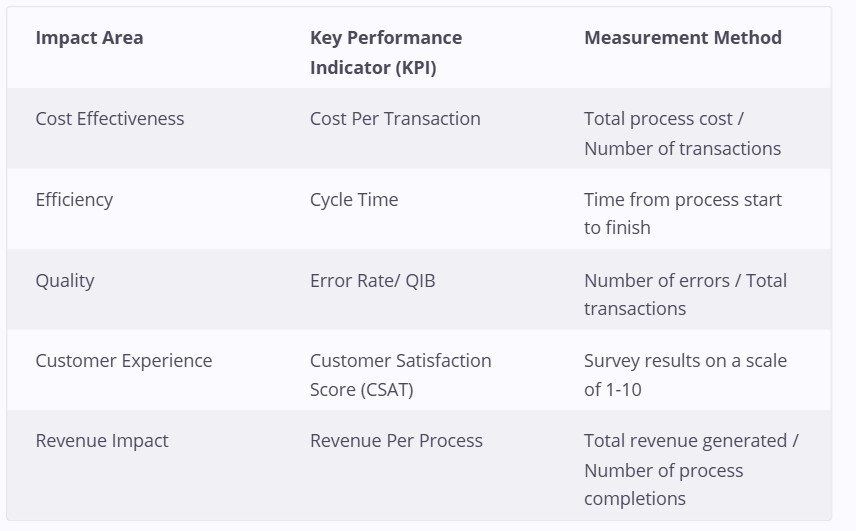
Develop a comprehensive ROI model that factors in both tangible and intangiblebenefits of BPO. Include metrics such as cost savings, productivity improvements,and revenue growth projections to demonstrate the financial impact ofoptimization efforts.
Highlight Competitive Advantage
Illustrate how optimized processes can lead to faster time-to-market, improved customer satisfaction, and increased market share. Use case studies and industry benchmarks to showcase the potential for gaining a significant edge over competitors.
Emphasize Scalability
Demonstrate how BPO and digital enablers create a flexible, scalable infrastructure that can easily adapt to business growth, new market opportunities, and changing customer demands without proportional increases in costs
Address Compliance and Risk
Highlight the role of digital enablers in enhancing regulatory compliance, reducing operational risks, and improving data security. Quantify the potential cost savings from avoiding compliance violations and data breaches.
Read more!